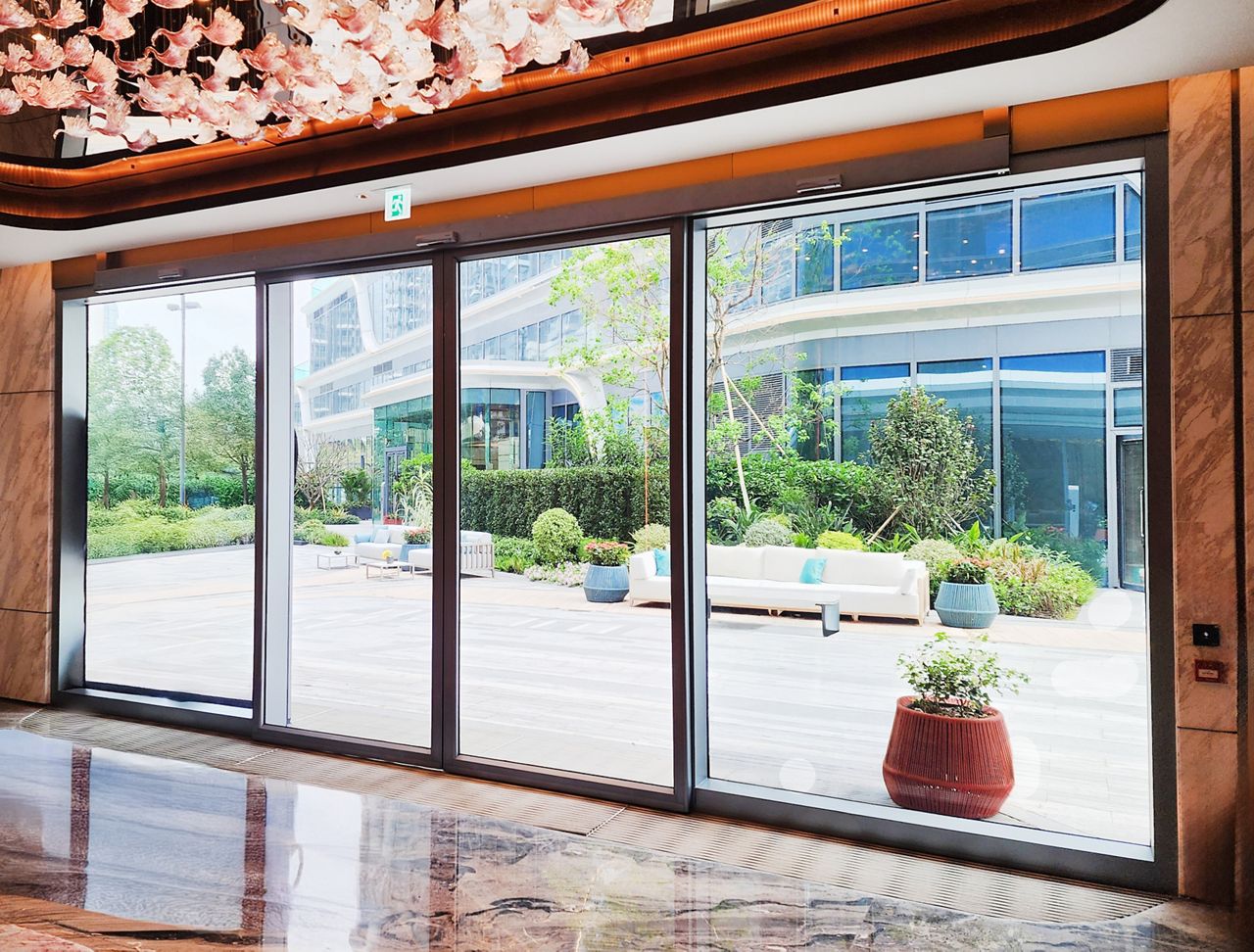
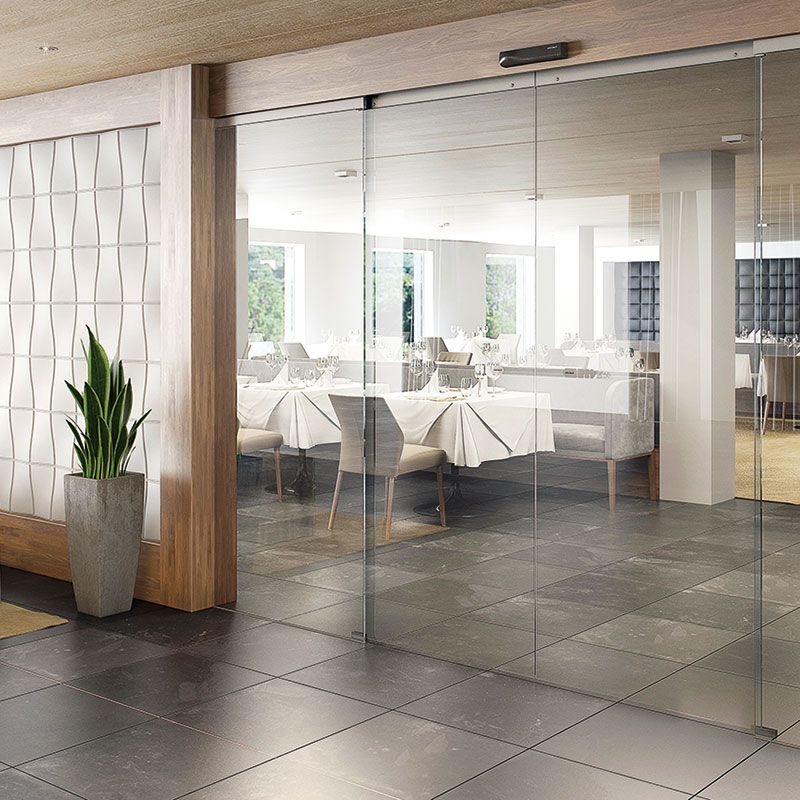
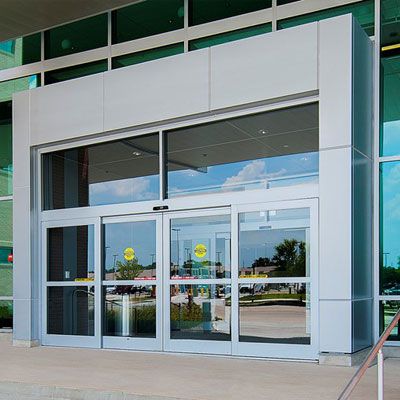
Whether you operate a sterile hospital ward, a premium commercial tower, or a high-footfall retail mall, optimizing automated entrances is a practical way to lower operational costs. Here are the core energy metrics to focus on.
1. Air Infiltration Rates across Different Facilities
Every time an automatic door opens, conditioned indoor air escapes, forcing your HVAC systems to work harder. The metric that measures this climate leakage is the Air Infiltration Rate.
The impact varies significantly by building type:
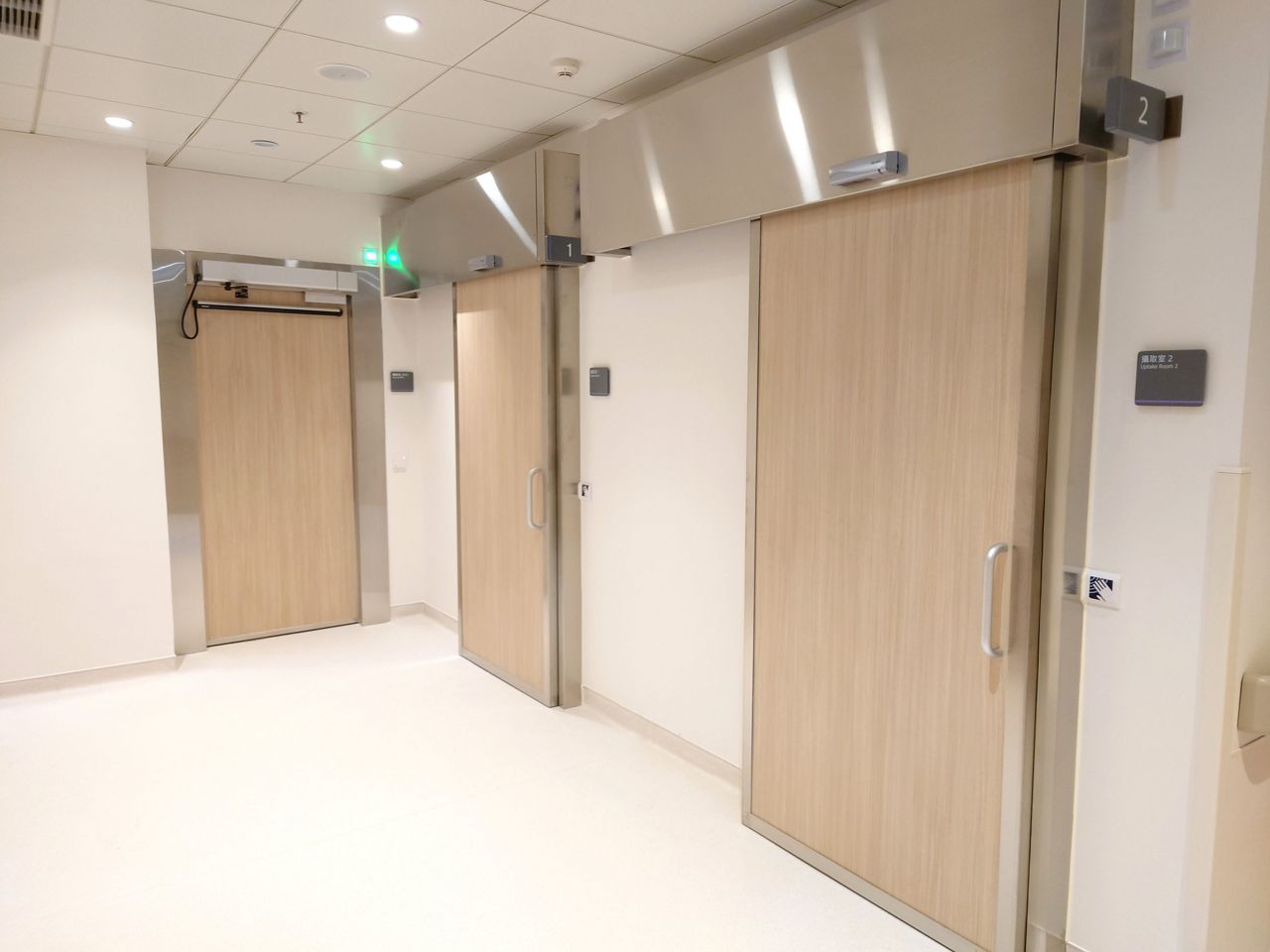
- Hospitals & Healthcare: Entrances must balance thermal isolation with strict infection control. Standard doors that linger open bleed cooled air and compromise cleanroom pressure. Directional sensors ensure doors close immediately after transit, reducing cooling loss by up to 30%.
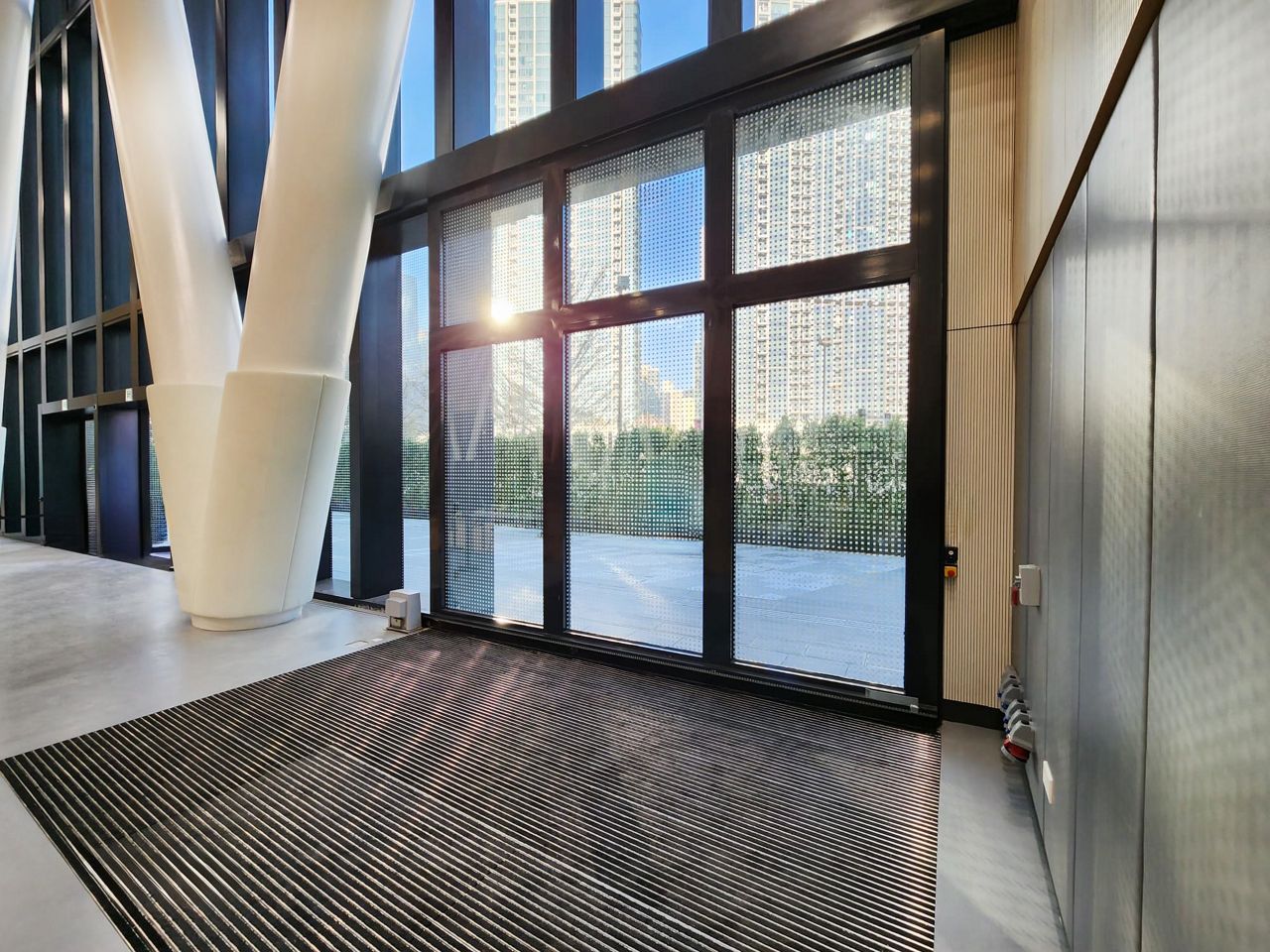
- Commercial Offices: Corporate lobbies experience intense traffic peaks during morning and lunch rushes. Using synchronized dual-door vestibule systems creates an airlock effect, preventing continuous hot drafts from entering the main lobby.
- Retail Malls: Retail hubs face constant "ghost activations" caused by window-shoppers walking near the entrance. Fine-tuning sensor zones ensures the doors slide open only when a customer genuinely intends to enter.
2. U-Value and Thermal Transmittance in Facade Design
When specifying exterior glass facades, architects focus heavily on the U-Value (Thermal Transmittance). A lower U-value means the door glazing and frame materials are more effective at stopping external tropical heat from radiating into your facility.
For premium commercial office blocks and modern retail shopfronts, using insulated automatic glass doors equipped with proper thermal breaks helps maintain a stable indoor baseline temperature. Specifying these low U-value configurations during the initial CAD and BIM design stages ensures your development complies with local green building criteria from day one.
3. Sensor Calibration and Traffic Timing
An automatic door is only energy-efficient if it opens and closes at the exact right moment. Standard doors often stay open longer than necessary due to uncalibrated factory settings.
By working with certified technicians to fine-tune your entrance sensor fields, facility operators can eliminate climate waste. For instance, adjusting a retail mall door’s sensor field to be narrower prevents nearby pedestrian sidewalk traffic from triggering the motor, protecting your indoor air conditioning.
4. Balancing Energy Saving with SCDF Fire Codes
In Singapore, energy efficiency must always align with safety infrastructure. Automatic entrances must balance tight thermal insulation with strict SCDF fire safety codes and evacuation path compliance.
Our automated swing and sliding solutions are built to handle these dual demands. They provide tight, weather-sealed insulation during standard operational hours to keep energy costs low. Yet, they connect directly to your Building Management System (BMS) to allow immediate, safe breakout access or fail-safe opening during an emergency.
Conclusion
Optimizing your automated entrances is one of the fastest ways to cut building operational costs. Selecting systems that prioritize low air infiltration, appropriate U-values, and precise sensor tracking allows you to protect your building's climate controls and reduce long-term maintenance overhead.
Need to spec-in high-performance sliding layouts or healthcare ICU systems? Upgrading an existing commercial or retail entrance? Check out our [Automatic Door Page].