How to chooes a panic exit device: door requirements

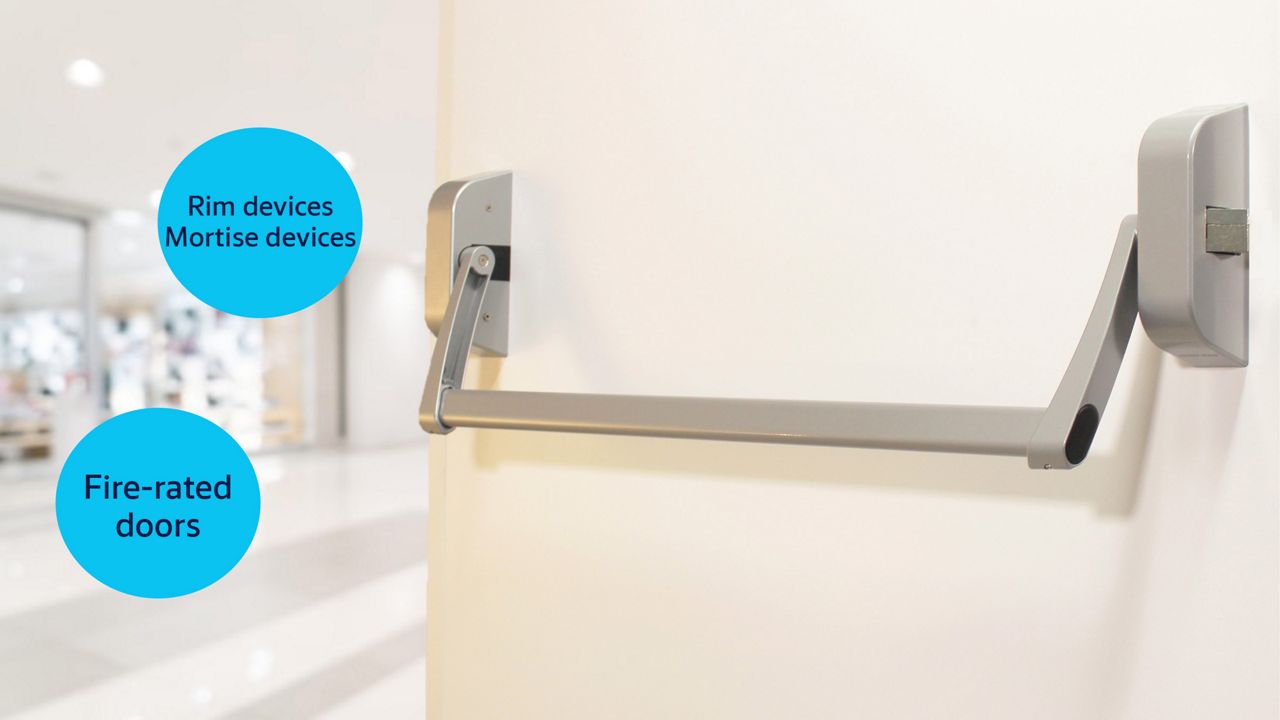
Not all panic devices are the same. We have already discussed the European standards and requirements governing the installation and manufacture of these products (read our article on standards EN 1125 and EN 179 and on CE marking).
In this article, however, we will look at the difference between mortise and rim devices and how to determine whether a model is suitable for use on fire and smoke-resistant doors.
Rim or mortise panic exit devices: what’s the difference?
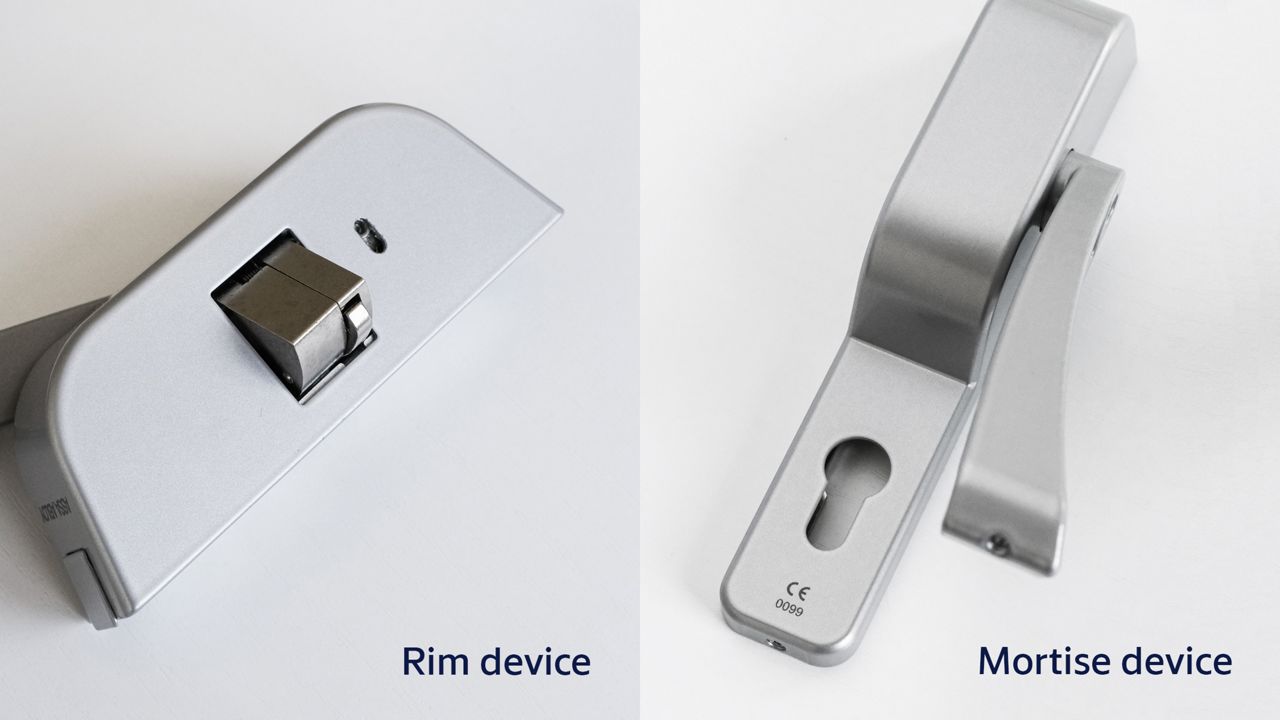
The main difference between rim and mortise devices lies in the type of installation on the door.
Rim panic exit devices
Rim devices have a locking mechanism built into the product itself. Once the door leaf is closed, the latch on the product engages with a special strike plate fitted to the door frame, preventing the door from being opened from the outside (to allow access from the outside, specific external handles for rim devices with an integrated half-cylinder must be fitted).
These products are a highly versatile solution that allows for simpler installation (without the need for major modifications to the door leaf) and quicker maintenance.
> Discover the full range of ASSA ABLOY rim panic exit devices
Mortise panic exit devices
Mortise devices do not have a built-in locking mechanism, but are installed in conjunction with a security mortise lock (electric or mechanical) specifically designed with a panic function.
This solution adds an extra layer of security against unauthorised access attempts from outside; furthermore, by installing an electric or motorised lock, the panic bar can be integrated into an access or exit control system.
> Discover the full range of ASSA ABLOY mortise panic exit devices
Which panic bars should be used on fire-rated and smoke doors?
Not all panic exit devices can be fitted to fire-rated or smoke-proof doors.
As regards fire safety regulations in Italy, the two main reference documents are the Ministerial Decree of 3 November 2004, as amended, and the Fire Prevention Regulations (Ministerial Decree of 3 August 2015, as amended). Whilst the former primarily sets out the enviroments and buildings in which panic exit devices may be installed, as well as the types permitted, the latter focuses on the characteristics the devices must possess to withstand a fire and on the periodic maintenance required to ensure this resistance is not compromised over time.
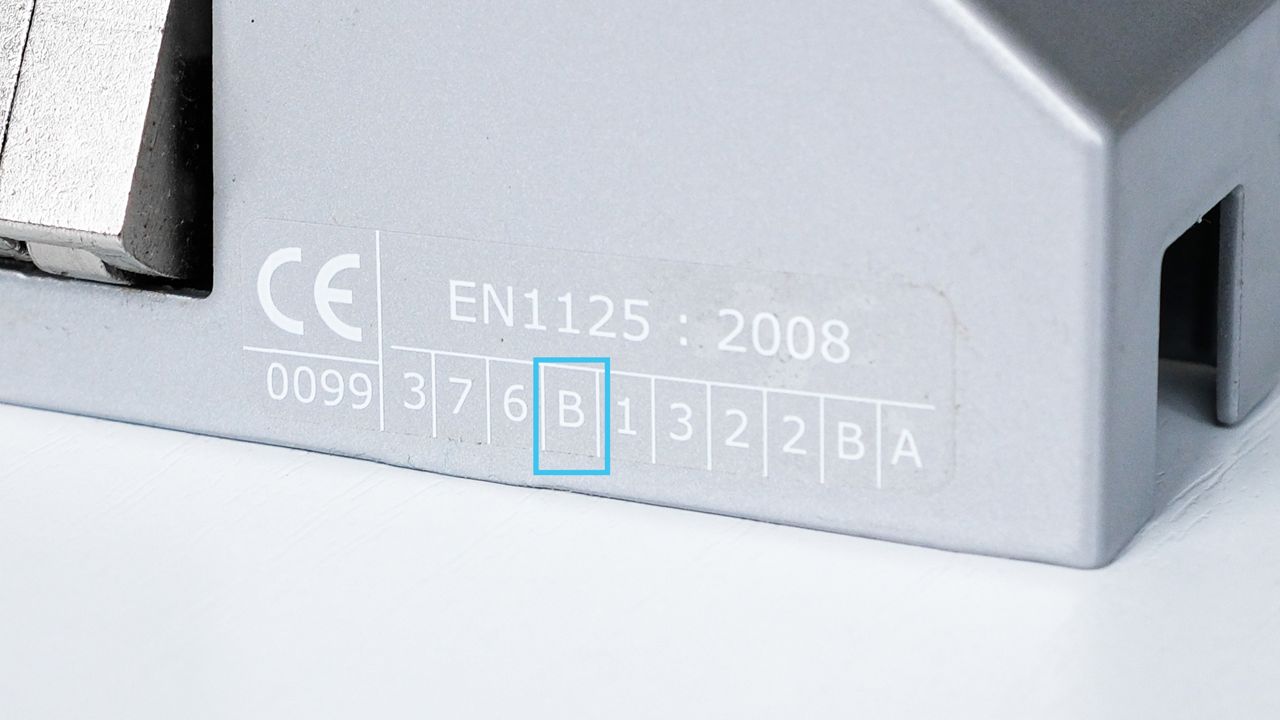
To be installed on a fire-rated or smoke-control door, a panic bar must be tested and certified. The EN 1125 or EN 179 certificates include a classification code, which acts as the device’s identification number. The fourth digit from the left indicates suitability for fire and smoke-resistant doors:
- 0 – The device may only be fitted to standard doors
- A – The device may be fitted to smoke-proof doors
- B – The device may be fitted to fire and smoke doors
In the case of mortise devices, the fire test is carried out on the panic exit device together with the matching lock. Suitability for installation on fire-rated and smoke doors will therefore only apply to the handle when fitted with those specific lock models.
Related products
Panic exit devices
They are designed to ensure immediate opening of doors in case of emergency and are certified according to current regulations.

You might also be interested in...
- Blog
How to chooes a panic exit device: European legislation
2026-07-13
