Door closers and automatic doors: what are the differences?

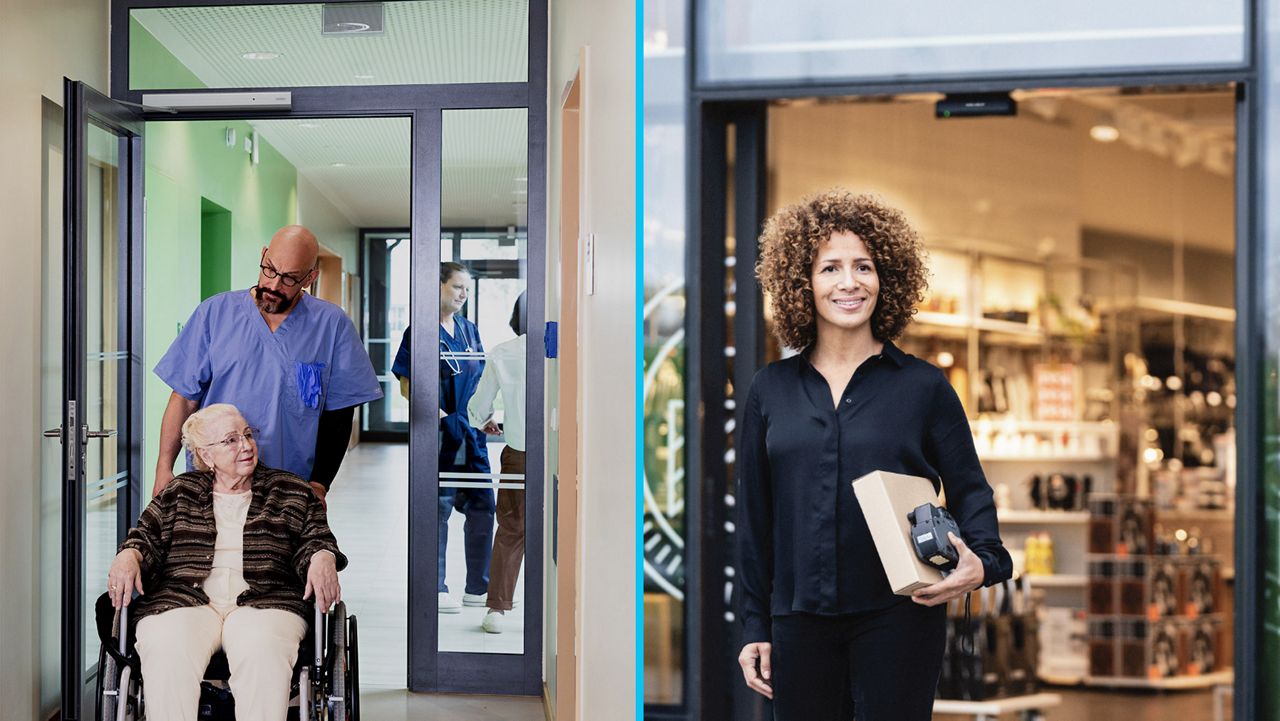
When a door closes automatically behind us, we often assume that the door we have just walked through is an automatic door, whereas it might actually be the action of a door closer.
Distinguishing at first glance between how these two devices work is not always easy. Although both offer convenience and efficiency, they are two very different solutions that meet different needs.
Let’s take a look at the features of these two devices and how to choose the one best suited to your needs.
What are automatic doors?
As their name suggests, automatic doors are devices that open and close on their own, without the need for manual intervention by a person.
They are activated by motion or presence sensors, buttons or access control systems, in accordance with specific instructions set at the time of installation.
Opening and closing are carried out by electric motors.
What are door closers?
Door closers are mechanical devices that allow a door to close automatically after it has been opened manually by a person.
They operate via a spring that allows the door to close in a controlled manner, applying the correct force to ensure it closes completely without damaging the door leaf or frame.
They are available in various models suitable for installation on doors of different sizes, materials and functions.
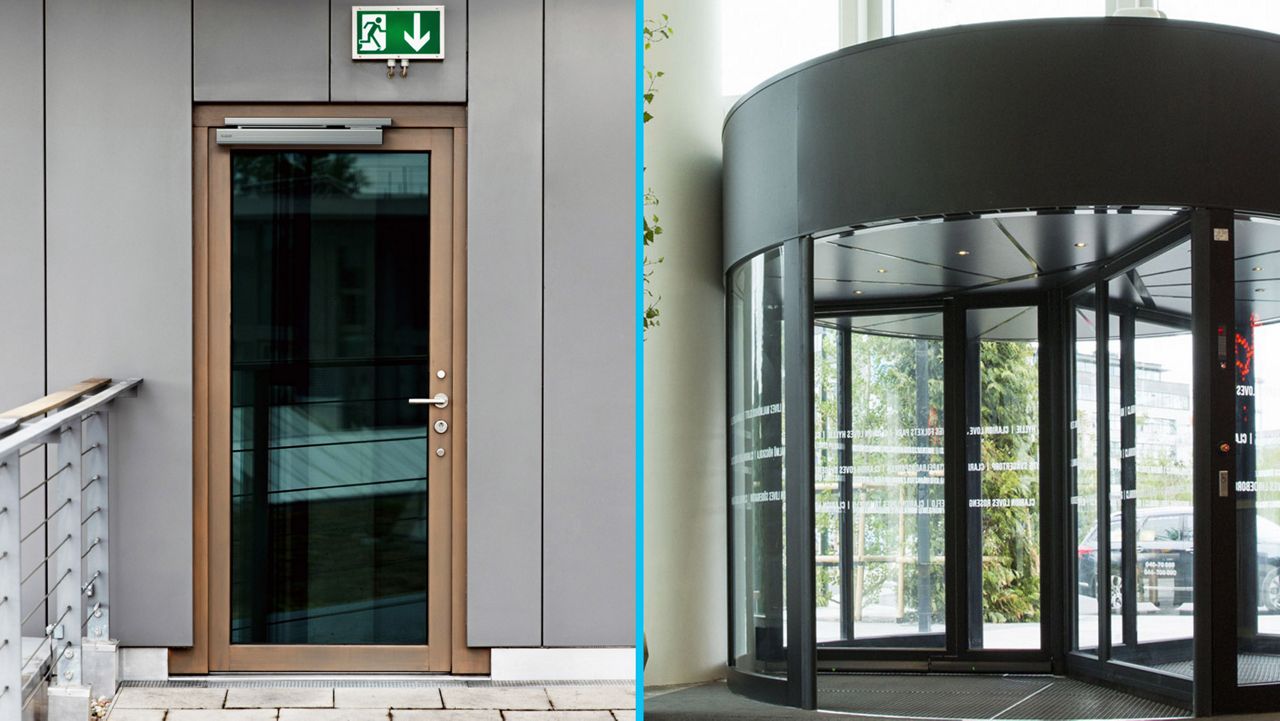
Door closers and automatic doors: where should they be used?
As they allow both opening and closing without the use of hands, automatic doors are best suited for:
- Emergency access points.
- Entrances to areas where hands-free access is required (such as operating theatres and warehouses where goods are handled).
- High-traffic access doors (for example, the entrance to an airport or a hospital).
Door closers, on the other hand, focus on ensuring the door closes securely in all situations, making them the perfect solution for:
- Access doors with medium or low traffic (for example, the entrance to a restaurant or a shop).
- Emergency exits.
- Fire and smoke-proof doors.
- Internal areas reserved for specific users (meeting rooms, staff areas, etc.).
They prevent doors from being left open in restricted areas, enhancing the security of data and work equipment, and help maintain a constant internal temperature within the building, reducing energy loss.
In some contexts, these two solutions can coexist: in hospitals, automatic doors welcome visitors at the entrance, whilst door closers ensure restricted access to internal areas and fire safety on internal and perimeter fire doors.
What are the installation and maintenance requirements?
Automatic doors offer the convenience of completely hands-free access. However, they require a power supply to operate and can only be used as fire doors and emergency exits if they comply with specific standards and meet certain safety requirements.
They also have higher installation and maintenance costs compared to fitting a door closer on a manual door.
Door closers are a more economical and easier-to-install solution and are better suited to situations where great attention must be paid to the safety requirements of buildings and people. They do not require electricity to operate and need less maintenance.
Related products
Door closers
They ensure that the door or gate of a building is perfectly closed in any situation, without hindering normal access for users.
