Electric strike 118: One for all and all-in-one
Intelligent technical features and universality turn the 118 strikes into high-quality all-rounders.

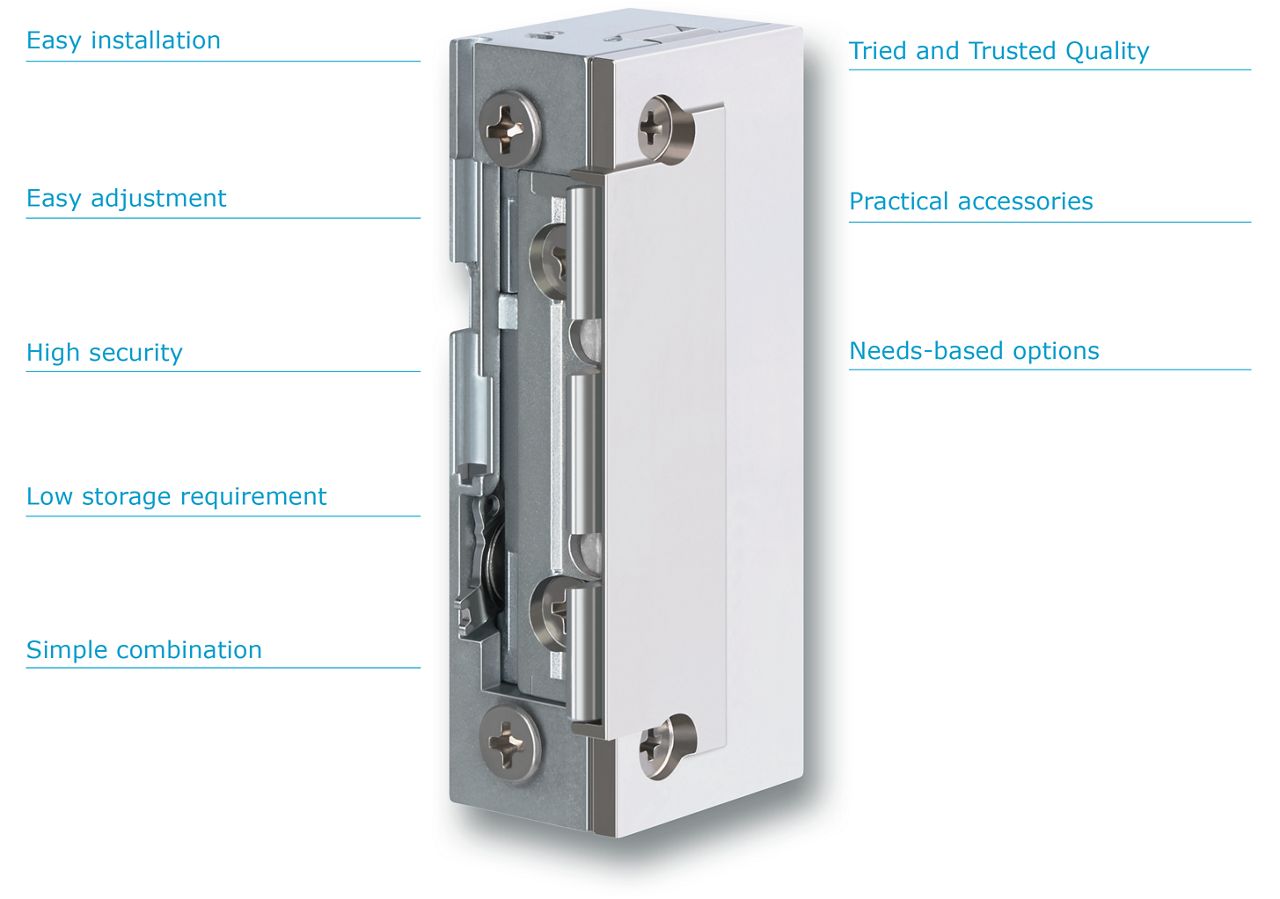
| Easy installation |
|
| Easy adjustment | With the FaFix® function, the electric strike can be subsequently adjusted to the latch bolt. FaFix® adjustment range 3 mm in 1 mm increments |
| High security | Min. 3,750 N and up to 9,000 N break-in resistance |
| Low storage requirements | Symmetrical design (standard version), can therefore be used DIN left/rightas well as horizontally/vertically |
| Simple combination | Compatible with all commercially available striking plates, also with striking plates for plastic profiles |
| Tried and trusted quality |
|
| Practical accessories |
|
| Needs-based options |
|
Solving problems with model 118
Whether heavy doors, special opening force requirements or continuous power supply - many everyday problems can be easily solved with variants and options of the 118 model:

More information
Download brochures
Find here all data and documents for download.
Product catalogue
Find all technical data, drawings and manuals.
Contact
Get in touch with us and our subsidaries