What are modular hospitals? How can they help solve the healthcare crisis?


Conventional hospitals are running out of room. Like retail and many other businesses, hospitals have to figure out ways to efficiently use the space to accommodate a surge of patients during healthcare crises. Some are turning to modular hospital solutions, which allow them to test out potential designs and prototypes without committing to a permanent space that may not be ideal for their needs once everything is up and running. There is even talk about how these modular hospitals could play a vital role in solving the world’s healthcare crises in the coming years.
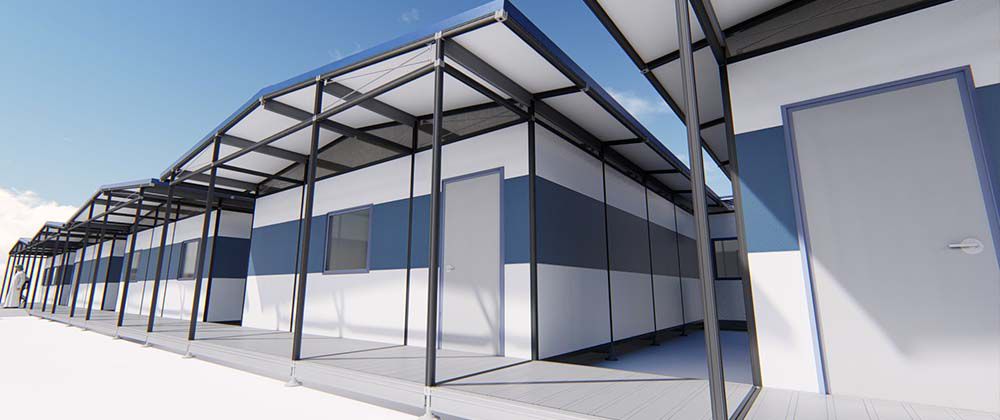
Image by gaptek via https://gaptek.eu/modular-hospitals/
Filling the Gap: Modular hospitals coming to the rescue
Traditional hospitals are not necessarily convenient or easy to access. Traditional hospitals could become inflexible at times despite having permanent premises, finding themselves short of space during peak seasons, renovation, pandemics, and natural disasters. This is when modular hospitals come to the rescue. While traditional hospitals take years to build, their modular counterparts could be erected within days, serving as a backup location to provide healthcare services to meet increasing demand.

Solutions to building modular hospitals
So, what are modular hospitals? Modular hospitals are characterized by their flexibility and practicality to cope with public health emergencies. To build a modular hospital, architects and designers often turn to the following solutions:
1. Transforming pre-existing locations
Modular hospitals are temporary emergency facilities built from prefabricated materials and by transforming existing large spaces, such as warehouses, convention centers, and indoor stadiums. These pre-existing locations often have access to water and infrastructure and protection from bad weather and extreme temperatures, which makes modular hospitals a cost-effective solution during pandemics.

2. Accelerating construction with technology
Building Information Modeling (BIM) software is on the rise in the architectural field for accelerating construction time. Such comprehensive software synchronizes various aspects of a construction project, optimizing project costs while improving the efficiency of the process from design, construction, delivery, asset management and beyond by creating a data-sharing platform where all team members and stakeholders could collaborate.
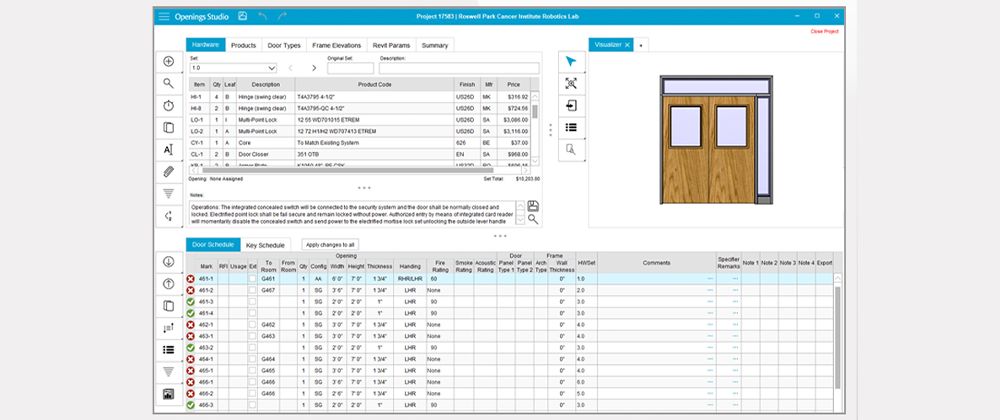
Image of BIM software by ASSA ABLOY via www.assaabloy.com/my/
3. Highly configurable spaces
Moreover, the new spaces created by modular hospitals are highly configurable, adapting to the changing needs as the pandemic progresses. Modular hospitals are constructed from prefabricated materials. These temporary features are easy to set up, saving precious time for other priorities.
4. Effective disease control
Modular hospitals are equipped with sanitation systems that ensure proper waste management to maintain effective disease control. Patient flow is another distinctive aspect of hospital designs. Space usage that allows quicker check-in processes and faster discharge times helps prevent cross-infection. To monitor the spread of infectious disease, patient and staff tracking within the modular hospital is also essential. By utilizing data driven solutions, modular hospitals can digitally trace the movements of healthcare practitioners and patients, collecting useful real-time data about interaction patterns.
5. Wireless access control
Wireless access control becomes a crucial design feature for modular hospitals, from safeguarding patients' privacy to protecting drugs. Wireless locks are easy to install and are free from complicated wiring. These customisable access solutions can be retrofitted into non-door openings, making the setup procedure more time-efficient.
Case Study: China’s Fangcang Shelter Hospital
China’s Fangcang Shelter Hospital stepped into the international limelight at the onset of the COVID-19 pandemic for its design concept. This modular hospital has characteristics that cater to public health emergencies: large-scale, flexible, cost-effective, and practical.
Fangcang was constructed in just 29 hours by converting public venues to house 4,000 beds for patients with mild to moderate cases. The advantages of repurposing the original infrastructure allow construction efforts to just focus on redesigning interior spaces. In addition, the large public venues made it possible for expansion. By March 2020, there were altogether 16 modular hospitals erected throughout Wuhan, housing up to 13,000 beds and providing shelter spaces for quarantine. Furthermore, the temporary nature of Fangcang avoided any long-term, inefficient use of space, as the temporary structures could be removed easily upon completion of the mission.
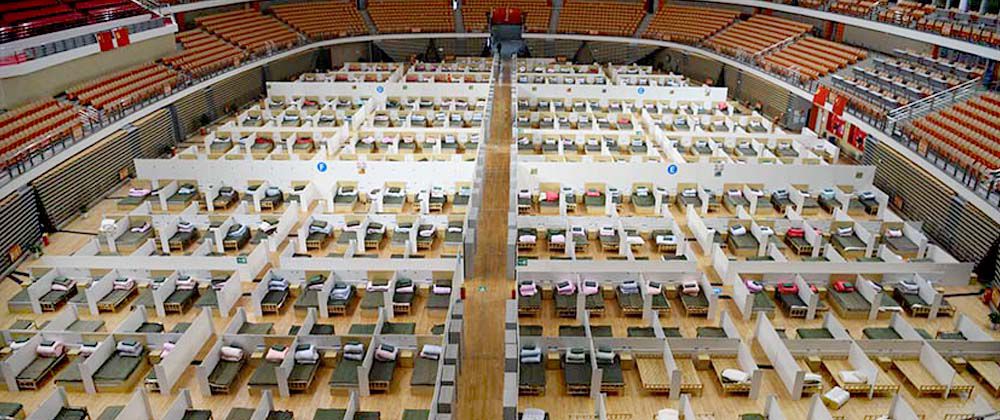
Image by sixthtone via https://www.sixthtone.com/news/1005273/inside-wuhans-fangcang-shelter-hospitals
In terms of patient care, the Fangcang Shelter Hospitals grouped mild to moderate cases together, which allowed hospitals to free up resources for more severe cases. The modular hospitals also had multifunctional spaces that doubled as community centers to take care of patients' mental well-being during their recovery.
How do Modular hospitals inspire post-COVID Hospital Designs?
The rise of modular hospitals during the pandemic gave architects, designers, and healthcare administrators insights into how countries may design hospitals after COVID-19. Given the ever-changing situations, a space's needs also evolve accordingly. There is a need to be more flexible. The flexibility of space is the key to becoming more resilient in face of adversities.
Questions and Answers
Q1: What are modular hospitals?
Modular hospitals, also known as field hospitals, are temporary structures erected at times of crisis to cater to public health emergencies. They are built from prefabricated materials, and are characterized by being large-scale, flexible, cost-effective, and practical.
Q2: How do modular hospitals help cope with public health emergencies?
Modular hospitals help relieve the burden of traditional hospitals by providing extra spaces for healthcare in a short period of time. They are easy to build and remove, designed to house a large number of patients to meet the surge of demand during times of crises such as natural disasters and pandemics.