TYPE OF DOOR
Door material - internal or external, single or double doors.
Electric strikes can only be used on single action inward OR outward opening doors. For double action swing-through doors other locking solutions like solenoid bolts, magnetic shear locks or double action electric latches are available. Nowadays there are strikes suitable for nearly all door styles and materials, the most popular being timber and aluminium followed by steel, and occasionally, uPVC.
Potentially, uPVC causes the most problems because of the narrow and often complicated section containing steel re-enforcing. Another problem is the fitting of a suitable lockcase into the narrow uPVC framing to operate with the strike. If the door contains a multi-point lock it is likely to be impossible to fit an electric strike.
If the door contains, or can be fitted with a latch, the best option could be to fit a narrow style sashlock and operate with a sashlock strike either in a UK or DIN faceplate format.
Whilst a sashlock can improve the level of security in any door when the deadlock is thrown, care should be taken to ensure that the bolt is removed prior to attempting the operation of the strike.
ANSI-STYLE STRIKE
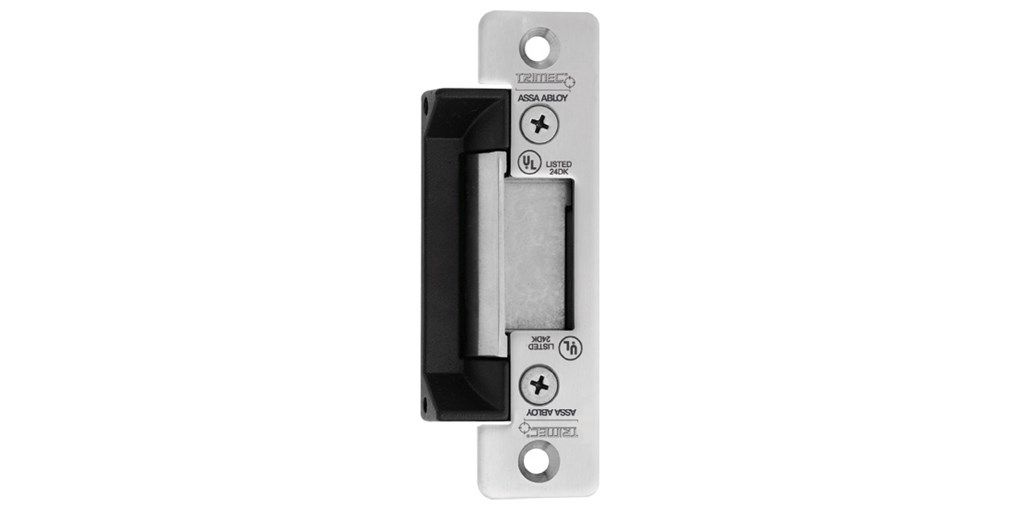
The first quantity usage of strikes was in the United States in aluminium doors and frames. This in turn led to an ANSI (American National Standards Institute) specification being produced. The ANSI short faceplate strike (flat or radius faceplate for single or double doors) became the standard for aluminium, whilst a further development was the introduction of a longer faceplated variant which made the ANSI style strike suitable for use in timber door applications.
MONITORING
Depending on model, most manufacturers produce strikes with or without a monitoring facility. This function relays back the state of the strike via single point monitoring of the latch in the jaw of the strike or by dual monitoring of both the latch and solenoid operation. For door state monitoring, consideration should be given to using a separate reed switch on the door/frame.
POWER TO LOCK/POWER TO OPEN
Fail Open (Power to Lock) or Fail Secure (Power to Open) are features of the electric strike that will be site dependant. For example, if the strikes are tied into the fire alarm system it is likely that they will be required to Fail Open (Fail Unlocked) once power to the strike is removed. Under other circumstances the strike may be required to fail in the locked position requiring the use of a Fail Secure (Power to Open) strike.