Max Eckstein & ASSA ABLOY - Strong partners for forensic door solutions

Max Eckstein & ASSA ABLOY - Strong partners for forensic door solutions
Doors in psychiatric and forensic clinics have special requirements to fulfil depending on the specific environmental conditions. They must also comply with country-specific laws and regulations. One of the few specialists in this highly sensitive field is Max Eckstein Türen-Tore-Zargen GmbH from Fürth in Bavaria. For about two years now, the team led by family entrepreneur Klaus Schüttler has been intensively developing the field of forensic doors, including individual special solutions, in close partnership with the forensic experts at ASSA ABLOY Sicherheitstechnik GmbH.
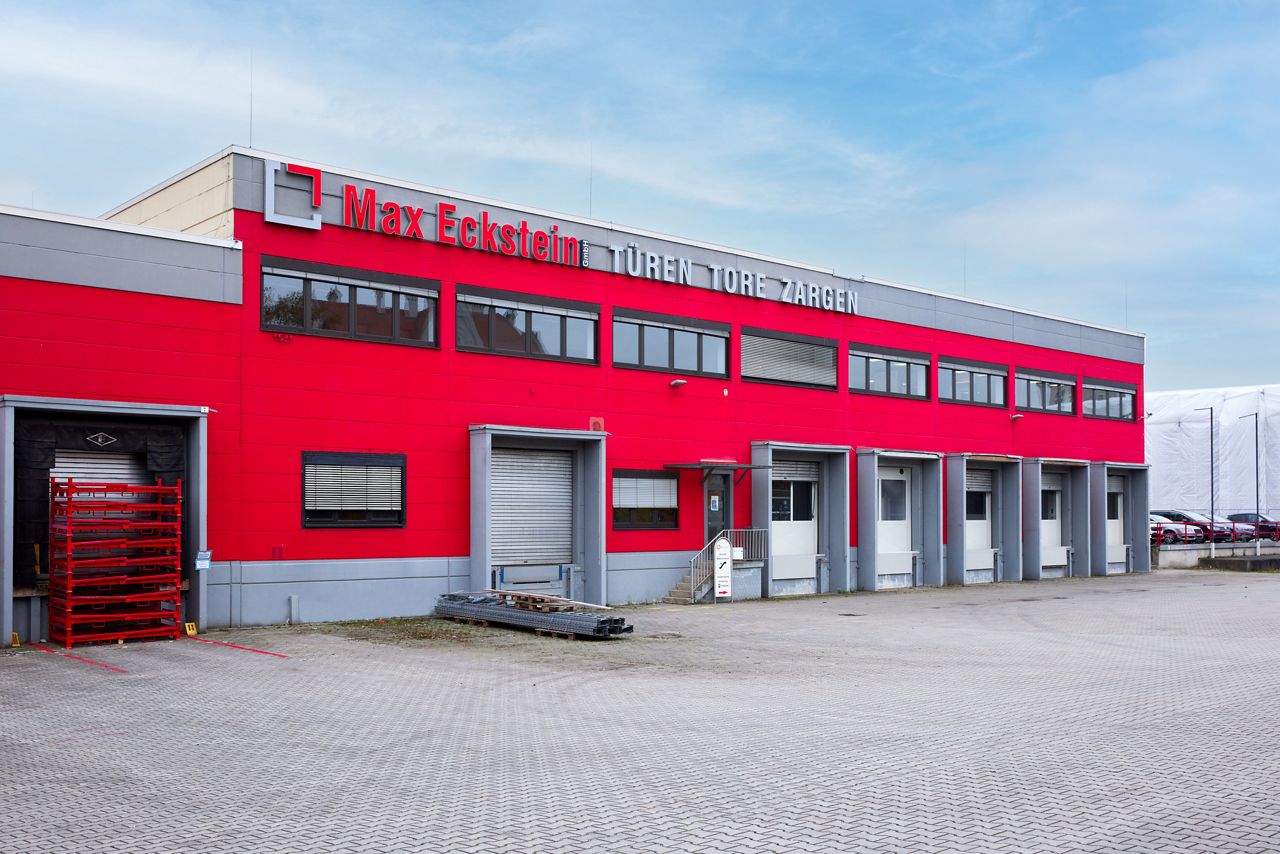
In fact, Max Eckstein has been working with effeff products from ASSA ABLOY for several decades, but has only been working closely with the security technology manufacturer from Albstadt for about ten years. The company was founded as Max Eckstein Stahlzargenwerk KG in Eckental in 1976 and was then transferred to the ownership of the Schüttler family in 1983 under the new company name. Since then, the manufacturer of special construction elements in steel, wood and aluminium has experienced stable growth and impressed the entire industry with great innovative and pioneering spirit. On the 6,000-square-metre production area at the current company headquarters in Fürth, Max Eckstein has been intensively driving forward, among other things, the development of ready-to-install forensic doors that are requirements-compliant and from a single source with a high degree of automation since 2022.
Modular construction system to prevent "uncontrolled growth"
Managing Director Klaus Schüttler explains this development:
"When we started working with forensic door systems, I was bothered by the fact that, due to the wide variety of building requirements and the often poorly defined version or lack of standardisation, the forensic doors offered and available on the market were experiencing a kind of uncontrolled growth. These are generally not up to the real application and are therefore not really suitable for use. That’s why we’re working at full speed on a modular construction system that can cover all possible applications and special requirements, from the 'normal' station door to the 'high-security' crisis intervention room."
The most important point of a door system is the frame. However, standard frames are far too narrow for use in forensic facilities and also too weak in terms of their basic strength, Klaus Schüttler reports on the first development milestone - an extremely stable frame system that is also suitable for retrofitting thanks to its flexible application options. "It consists of a mounting frame that contains all the necessary cabling and is then glued or screwed seamlessly to the counter frame. In combination with the effeff escape door strike 352M as a three-point locking system, for example, this makes the entire locking solution virtually indestructible and secure against tampering," explains Klaus Schüttler. Nevertheless, the escape route function is ensured, something that is often overlooked during planning.
In addition to other typical requirements such as sound insulation, vandalism protection, protection against suicide or break-in, personnel protection and and resistance to contamination, the door systems also have to be discreet, i.e. not provoke or convey a “prison feel”, depending on the type of hospital and patient profile. Max Eckstein has also developed solutions for this in the form of adapter profiles on the door leaf, which can be retrofitted and can also be manufactured in series. Max Eckstein’s product portfolio also includes special solutions for highly patient-specific, individual queries from clinic operators. The team is currently working on models for high-security doors that weigh up to 140 kilograms and include a food hatch plus viewing window or an electronic spy. In contrast to the usual viewing windows, the modern electronic spies will significantly increase safety for nursing staff and patients in the future. A removable operating unit allows nursing staff to discreetly look into the patient room without disturbing them. If the operating unit is removed, unauthorised persons or even fellow patients cannot look into the room.
Unique: Training and exhibition centre for forensic doors
As versatile as the application scenarios are, so are the possible pitfalls when collaborating with the responsible authorities, architects, planners and clinic operators. Klaus Schüttler knows this from experience:
"Architects, users and staff often have different ideas regarding the design and applicability. In order to mitigate this uncertainty in advance, we have set up many practical application scenarios in an exhibition and training centre for around 40 participants on our company premises. This means that each door element can not only be inspected directly, but also tested thoroughly at the same time. The test scenarios are structured systematically so that the combination of the safety devices in a building network and the variant as a BUS system can also be simulated realistically and practically. This enables us to work with customers to find solutions that meet their needs and test them directly in the shortest possible time. The exhibition is 'living', which means that we are constantly expanding it with new product innovations."
Customer benefit through strong partnership
These innovations arise primarily from open discussions with customers and in direct, close cooperation with ASSA ABLOY’s experts. One of these is Sebastian Ott, Project Sales in Bavaria:
"I believe that the opportunities offered by Max Eckstein for practical testing and further development of forensic door systems are unique in Germany. I don't know any other manufacturer that supplies ready-to-install door elements from a single source according to the 'all-in-one' principle and that can also provide extensive advice and training to its customers at the same time." For his part, Klaus Schüttler appreciates the partnership with ASSA ABLOY for its high-quality and compatible full product range, but above all for its dedicated, personal service, even in difficult cases and when faced with exceptional customer challenges.
Customers and clinic managers benefit from the rapid implementation and testing possibilities at the Max Eckstein training and testing centre on site. And the demand is growing constantly. "That’s why we want to expand our training centre even further together with ASSA ABLOY to make hands-on training even more effective. Online seminars are one thing. However, we know that practical experience determines the success of a door solution. As the topic becomes ever more extensive and demanding, it is extremely important for us to take this into our own hands and take on a pioneering role together with ASSA ABLOY," says Klaus Schüttler, looking forward to the continued cooperation.