The TEMPEST Door: Securing Against Electromagnetic Intrusion
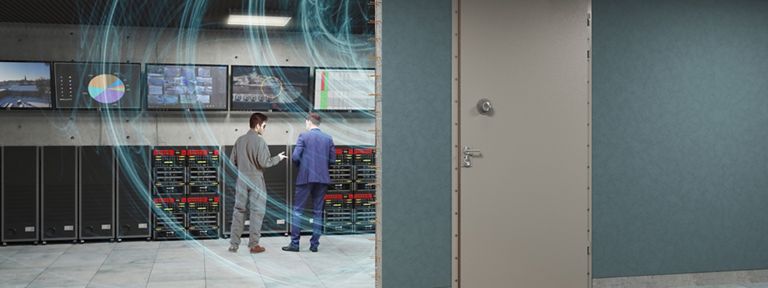
Beyond Cyber: The Rise of Electromagnetic Threats
In today’s world, the walls of a building are no longer enough. Sensitive environments — from data centres and command centres to diplomatic missions — face a new kind of threat: one that doesn’t break in, but listens in.
Every electronic device emits electromagnetic radiation. These emissions, often invisible and unintended, can carry sensitive information. Sophisticated techniques like Van Eck phreaking and TEMPEST attacks allow adversaries to intercept and reconstruct data — keystrokes, images, even conversations — without ever stepping inside the room.
This isn’t science fiction. It’s happening now. And as digital infrastructure grows, so does the need to protect it — not just from cyber threats, but from physical vulnerabilities that allow those threats to slip through.


The Weakest Link – Doors
In shielded environments, walls, ceilings, and floors are often designed with electromagnetic protection in mind. But doors — as moving, functional components — are frequently overlooked or under-specified.
A single unprotected door can compromise the integrity of an entire secure room. Gaps, poor seals, or incompatible materials allow electromagnetic signals to leak, creating a critical point of failure. Even in spaces built to resist surveillance, the door can become the silent vulnerability.
In high-risk environments, the door is not just an access point — it’s a security boundary. Without proper shielding, it becomes the weakest link in an otherwise robust defence.


Introducing the TEMPEST Door
The TEMPEST Door is a dual-threat solution — engineered to block radio frequencies (RF) and electromagnetic (EM) signals while resisting forced entry.
- Shielding effectiveness: 44.7 dB to 121.4 dB across 30 MHz to 5 GHz
- Burglary resistance: RC4 (EN 1627:2012) and mechanical strength Class 4 (EN 1192:2001)
- Construction: Angular steel frame, zinc-plated steel sheets, mineral wool core, and metal gaskets
- Applications: Faraday cages, SCIFs, secure RF rooms, data centres, command centres, and diplomatic missions

Designing for Defence
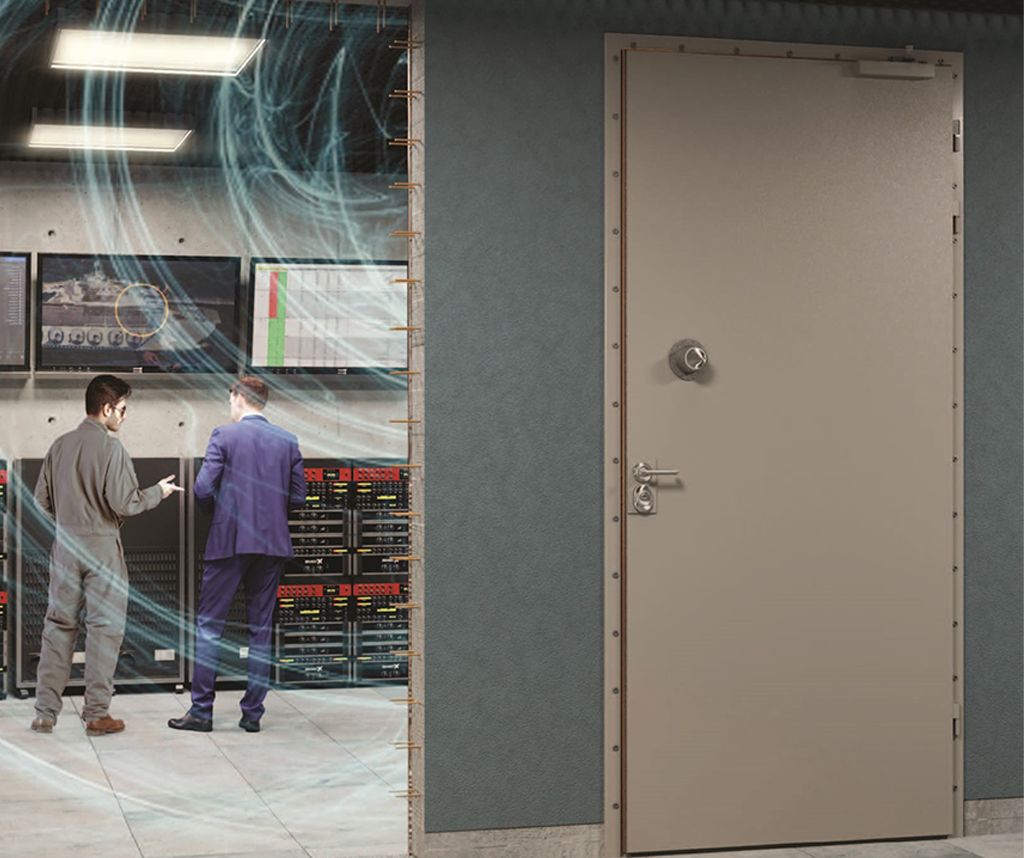
At the heart of the TEMPEST Door is a construction strategy that prioritises both physical resilience and electromagnetic containment. Its angular steel frame, zinc-plated steel sheets, and mineral wool core form a robust barrier — not just against forced entry, but against the invisible threats of RF and EM signal leakage.
The door’s shielding capability is rooted in electromagnetic isolation principles, where every material and component play a role. The steel structure acts as a conductive shell, while the mineral wool core dampens internal reflections. But it’s not just about the bulk materials — gaskets, hinges, and seals are engineered to eliminate gaps and discontinuities that could allow signals to escape.
This attention to detail ensures that the door functions as a Faraday-like enclosure, maintaining the integrity of secure environments where data interception is a real risk.

Performance & Certification
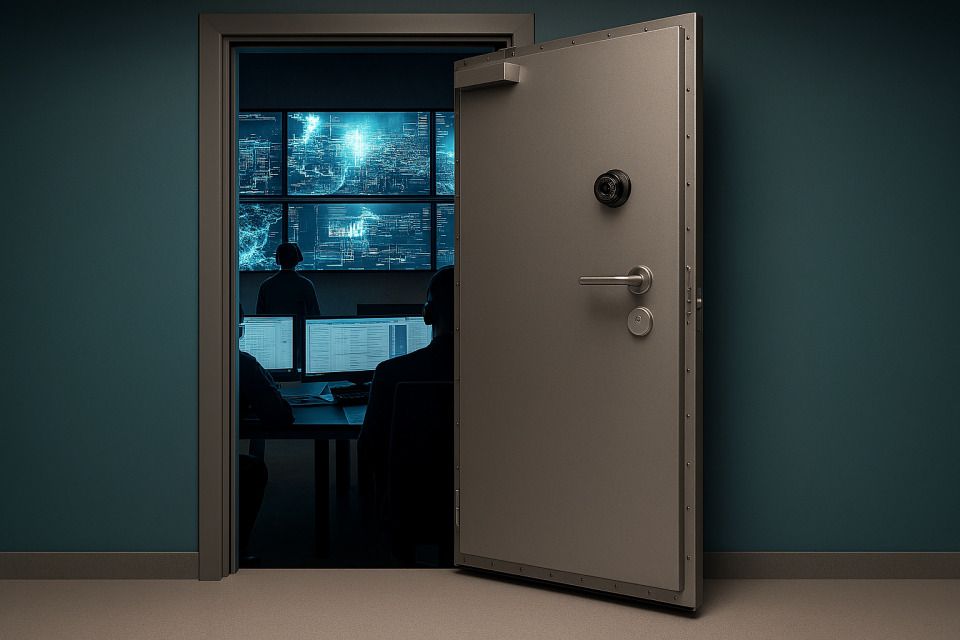
The effectiveness of the TEMPEST Door isn’t just theoretical — it’s backed by rigorous testing and internationally recognised standards.
- Shielding performance: 44.7 dB to 121.4 dB across 30 MHz to 5 GHz
- Certifications:
- IEEE Std 299-2006 for shielding effectiveness
- EN 1192:2001 for mechanical strength (Class 4)
- EN 1627:2012 for burglary resistance (RC4)
These certifications confirm that the door performs under pressure — both physically and electromagnetically. Whether resisting forced entry or preventing data leakage, the TEMPEST Door meets the demands of high-security environments.

Applications in the Real World
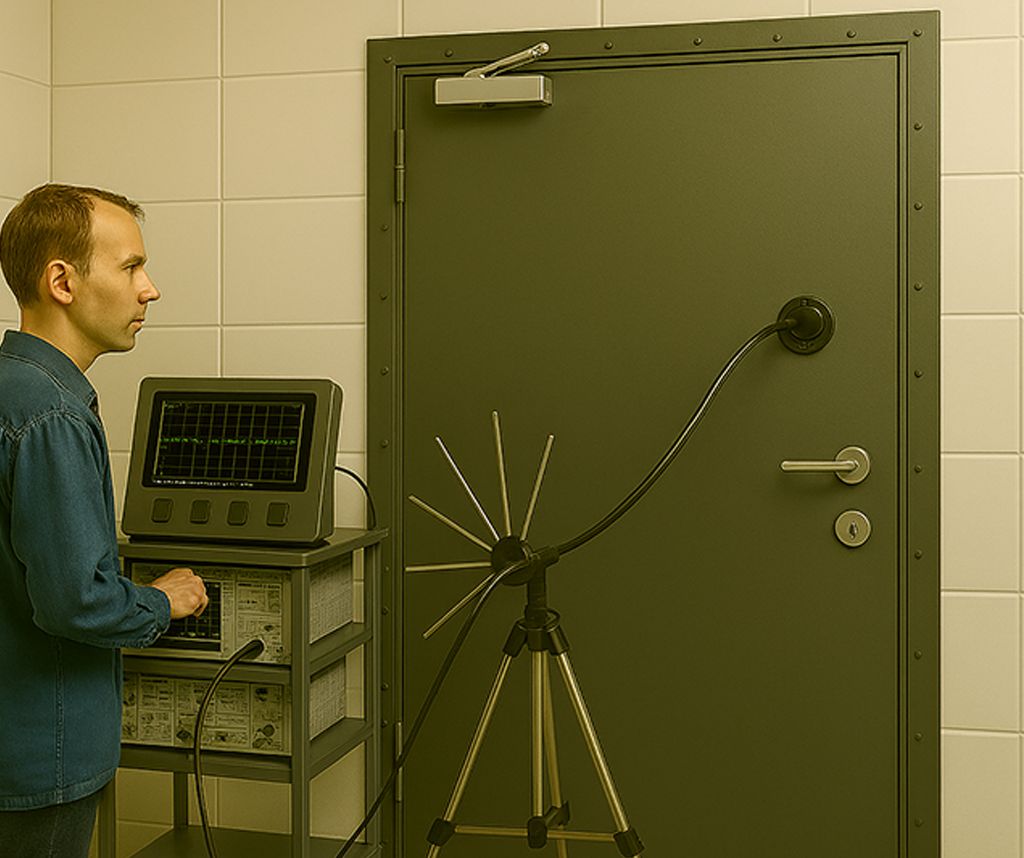
The TEMPEST Door isn’t just built for performance — it’s built for purpose. Its shielding and physical resistance capabilities make it ideal for environments where both data protection and physical security are critical.
Common Use Cases:
- Military command centres
- Data centres with classified processing
- Diplomatic missions
- Secure communications rooms (including SCIFs and RF-shielded enclosures)
In these settings, shielding alone isn’t enough. A secure door must also resist forced entry, maintain structural integrity, and integrate seamlessly into the building’s safety and compliance systems.


Future-Ready Security Strategy
As threats evolve and compliance demands grow, the need for integrated, resilient security solutions has never been greater.
The TEMPEST Door offers more than shielding and strength—it delivers a future-ready approach to physical security, combining robust construction with advanced electromagnetic protection.
Whether installed in a military command centre, a secure communications room, or a data centre handling classified information, the door plays a vital role in maintaining operational integrity and regulatory accountability.